Third Reich Book Review
How Germany slid into autocracy and parallels in the U.S.
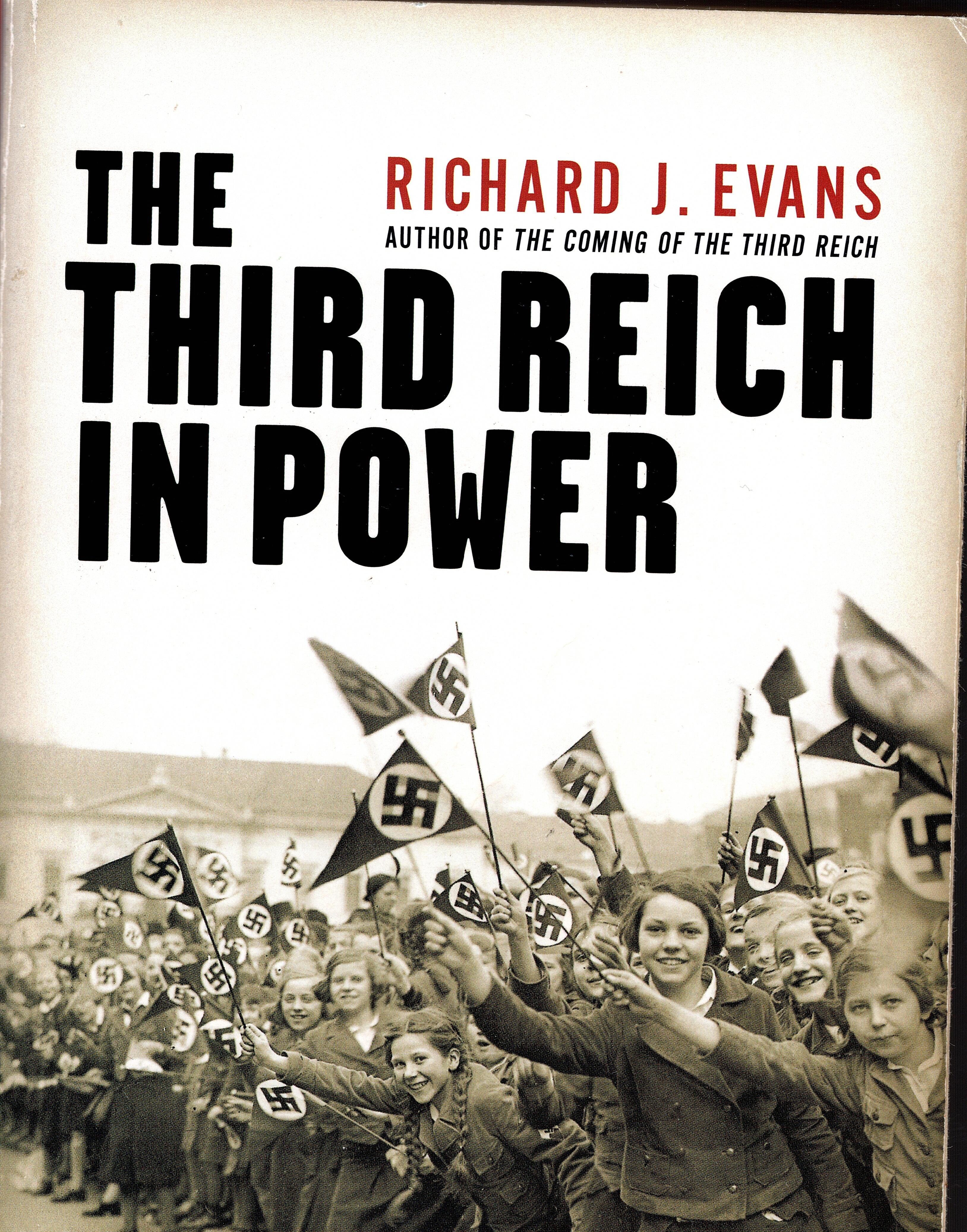
The history of the Third Reich cited here comes from the three-volume treatise by Richard J. Evans. I reference these three volumes with roman numerals I, II, and III. The detailed citations are given next.
I: Evans , Richard J. 2003. The coming of the Third Reich. Penguin Books, New York.
II: Evans , Richard J. 2005. The Third Reich in power. Penguin Books, New York.
III: Evans , Richard J. 2008. The Third Reich at war. Penguin Books, New York.
Germany’s transition from a democratic government to a dictatorship
After losing the first world war Germans struggled to rationalize their defeat. Many settled on the idea that the country had been “stabbed in the back” by Jewish powers. A theme Hitler would come back to repeatedly. This resentment coupled with runaway inflation in the early 1920’s, and the depression and mass unemployment in the early 1930’s, left the ruling moderate parties damaged and further polarized left and right wing parties. Below I quote Evans’ concise summary of the appeal of the Nazi party. Although Evans wrote this around 2005 the parallels to the U.S. MAGA movement, ten years later, are eerily similar.
The transition to a dictatorship was also due to “..the Nazi movement itself. Its ideas evidently had a wide appeal to the electorate, or at least were not so outrageous as to put them off. Its dynamism promised a radical cure for the Republic’s ills. Adolf Hitler was a charismatic figure who was able to drum up mass electoral support by the vehemence of his rhetorical denunciations of the unloved Republic, and to convert this into political office, finally, at the right time. ….. The Nazi party was a party of protest, with not much of a positive programme, and few practical solutions, to Germany’s problems. But its extremist ideology, adapted and sometimes veiled according to circumstance and the nature of the particular group of people to whom he was appealing, tapped into a sufficient number of pre-existing German beliefs and prejudices to make it seem to many well worth supporting at the polls. For such people , desperate times called for desperate measures; for many more, particularly in the middle class, the vulgar and uneducated character of the Nazis seemed sufficient guarantee that Hitler’s coalition partners, well educated and well bred, would be able to hold him in check and curb the street violence that seemed such an unfortunate, but no doubt temporary, accompaniment of the movements’ rise to prominence.” (I, pgs. 447-448).
Loyalty above all
Third Reich
In April 1934 Paul von Hindenburg became seriously ill and his passing would create a crisis for Hitler’s regime since Hindenburg had served as a buffer between the army and conservatives. Without Hindenburg would conservatives continue to support Hitler’s regime? The enthusiasm that brought Hitler to power in 1933 and his “national revolution” had markedly fallen off a year later. “The leading Nazi’s were aware that such mutterings of discontent could be heard…In answer to questions from the American journalist Louis P. Lochner, Hitler went out of his way to stress the unconditional loyalty he required of his subordinates” (II, pg. 29).
“On 2 August 1934, troops all over the land were summoned and made to swear a new oath, devised by General von Reichenau without any consultation with Hitler himself. The old oath had pledged allegiance to the abstract entity of the Weimar Constitution and the unnamed person of the President. The new one was very different: ‘I swear by God this holy oath , that I will render unconditional obedience to the Leader of the German Reich and people, Adolf Hitler, the supreme commander of the armed forces, and as a brave soldier am willingly prepared to risk my life for this oath at any time’” (II, pg. 43).
Loyalty above all
Trump
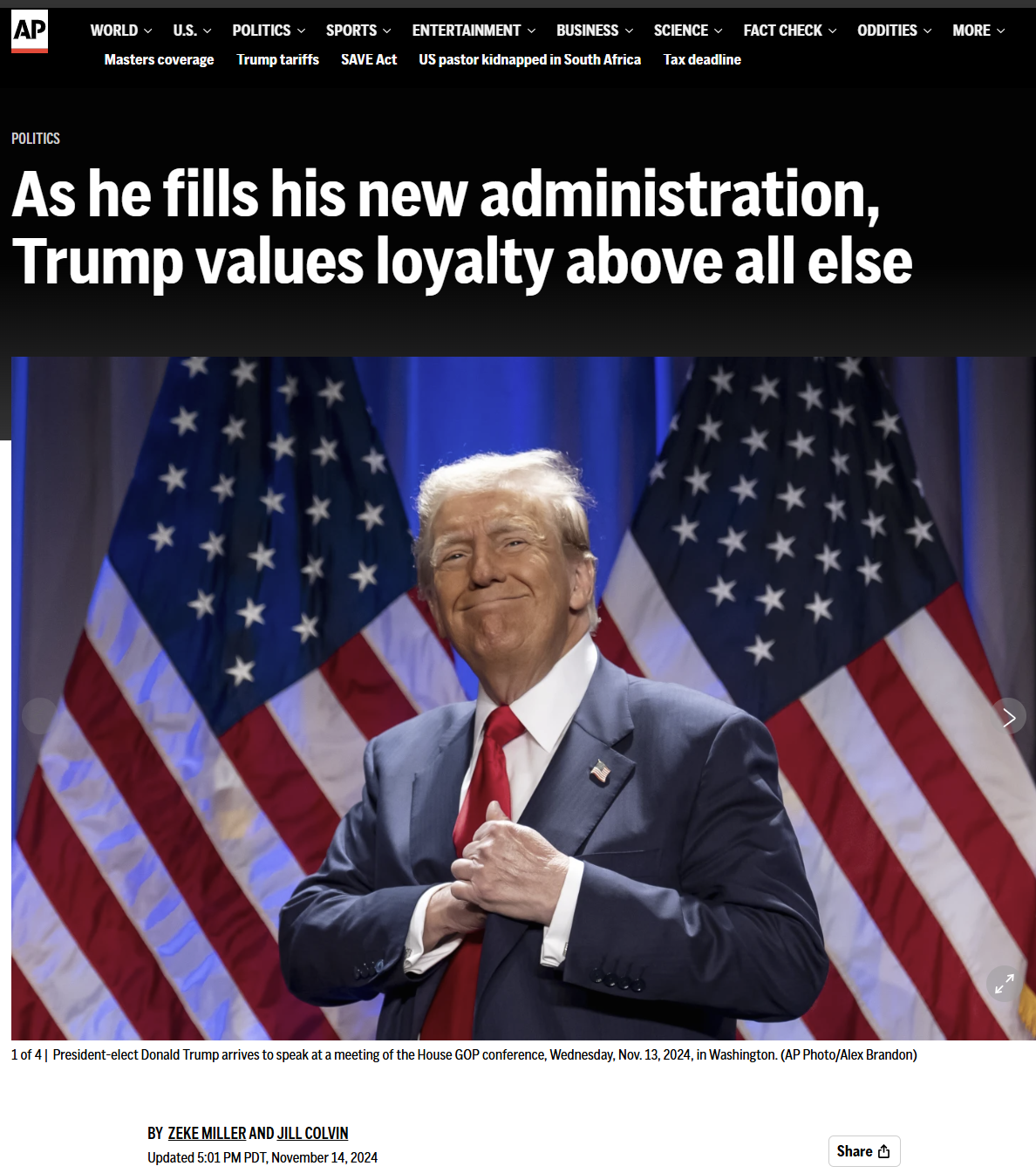
A hallmark of Trump’s second term has been his requirement for loyalty above competence.
National emergencies are used as an excuse to assume more power
Third Reich
Shortly after the end of World War I Germans elected a Constituent Assembly. They were tasked with writing a new constitution. On 31 July 1919 the new Weimar Constitution was approved. Instead of the Kaiser was a Reich President who would be elected by popular vote. It was a modified version of the constitution established by Bismark nearly 50 years earlier. Included in the constitution was Article 48 which gave the Reich President the power to rule by decree under exceptional emergencies.
As the Nazis consolidated power after Hitler’s election to Reich Chancellor in 1933, opponents were jailed and killed while Jews were fired from their jobs. “At every point, therefore, Hitler and his associates sought a legalistic fig-leaf for their actions.” (I, pg.452).
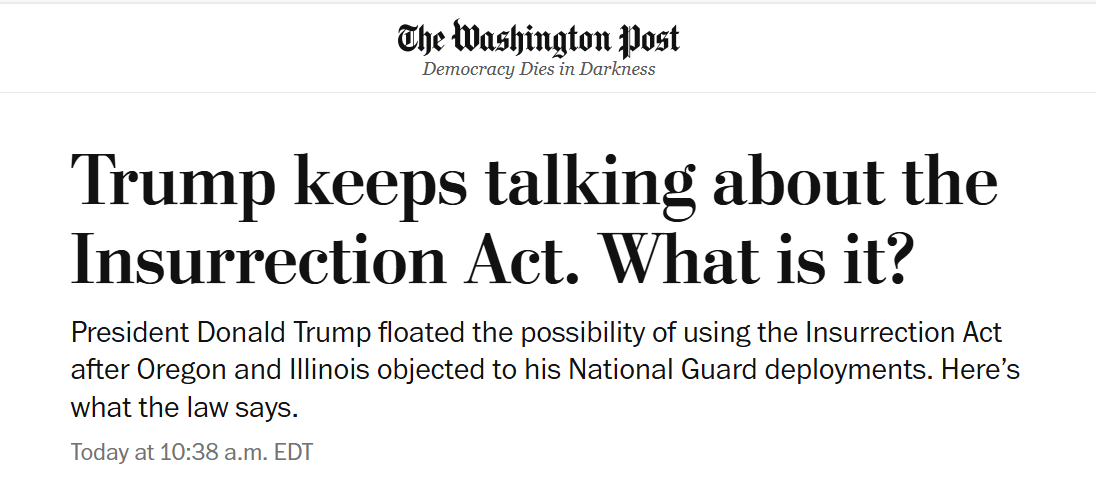
But legal justifications did not exist. “At every point in the process, the Nazis violated law. In the first place they violated the spirit in which the laws had been passed. Article 48 of the Weimar constitution, in particular, which gave the President the power to rule by decree in time of emergency, had never been intended to be the basis for any more than purely interim measures; the Nazis made it into the basis for a permanent state of emergency that was more fictive than real and lasted in a technical sense all the way up to 1945.” (I, pg. 453).
National emergencies are used as an excuse to assume more power
Trump
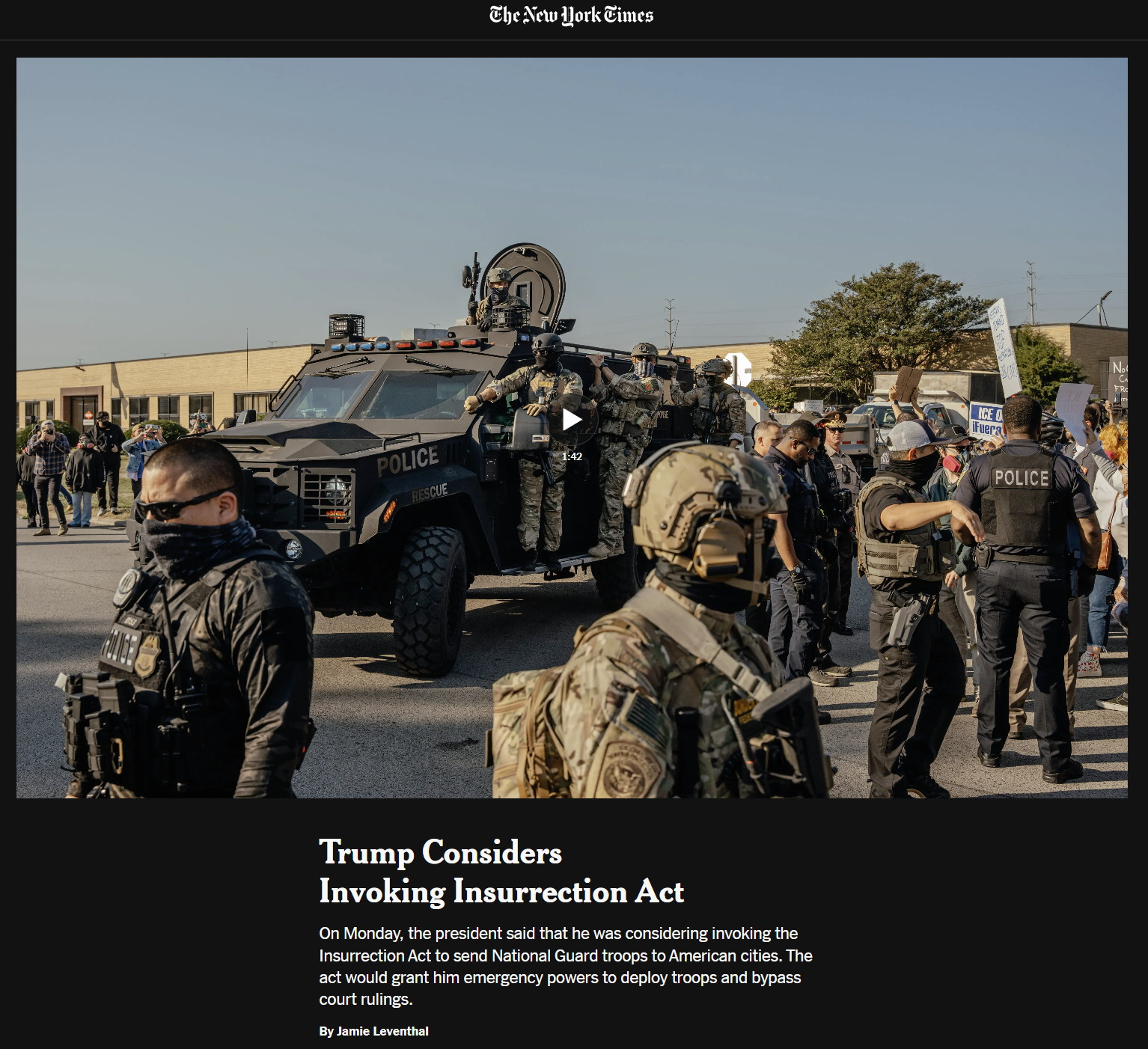
Trump has used the premise of emergencies to justify his tariffs, an emergency on the southern border to intensify deportations, and the deployment of the military.
Stifling political opposition and perceived enemies.
Third Reich
When Hitler came to power in January 1933 he was still constrained by a constitutional democracy. But in a short time he was able to make great progress towards his ultimate goal of creating a dictatorship he would lead.
On February 27th, 1933, a Dutch construction worker with Communist sympathies, Marinus van Lubbe, made his way into the Reichstag, the seat of German government. There he set fire to some curtains in the debating chamber but was ultimately stopped by Reichstag officials. The Nazis were able to blow this lone actor into a sinister plot by the Communists. This follows the theme discussed in my section “National emergencies are used as an excuse to assume more power”. They eventually pressured President Hindenburg into signing the Reichstag Fire decree which gave extensive new powers to the Hitler government. Paragraph 1 of the decree suspended key parts of the Constitution which were, “Thus key restrictions on personal liberty, on the right of free expression of opinion, including freedom of the press, on the right of assembly and association, and violations of postal, telegraphic, and telephonic communications, and warrants for house searches , orders for confiscation as well as restrictions on property rights are permissible beyond the legal limits otherwise prescribed.” (I, pg. 333). Paragraph 2 of the decree allowed Hitler’s government to take over federal states if the public order was endangered.
The Nazis did not have the two thirds majority in the Reichstag which would allow them to change the constitution, but they threatened civil war to get the Reichstag to pass the Enabling Act on 23 March 1933, which gave Hitler’s cabinet the right to rule by decree without consulting either the Reichstag or the President. Thus, the Reichstag Fire decree and the Enabling Act set up the conditions for Hitler to eliminate his political opponents which he did in a brutal way now called the “Night of long knives”.
On 30 June 1934 known as the “The night of long knives”, Hitler decided to remove many of his enemies and competitors for power starting with Ernest Röhm the leader of the paramilitary brownshirts whose membership and influence were on the rise. Others targeted included “..the former Minister-President Gustav Ritter von Kahr, who played a key part in quelling the Hitler Putsch in 1923” he was “cut to pieces by SS men” (II, pg. 36). “The conservative Bavarian politician Otto Ballerstedt, who had successfully prosecuted Hitler for breaking up a political meeting at which he had been speaking in 1921, resulting in the Nazi Leader spending a month in Stadelheim, was arrested and shot in Dachau on 1 July” (II, pg. 36).

Stifling political opposition and perceived enemies.
Trump
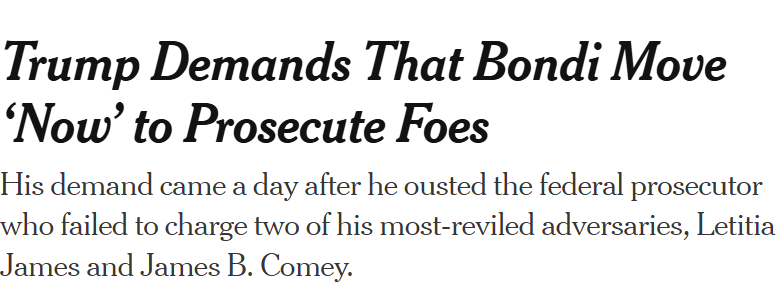
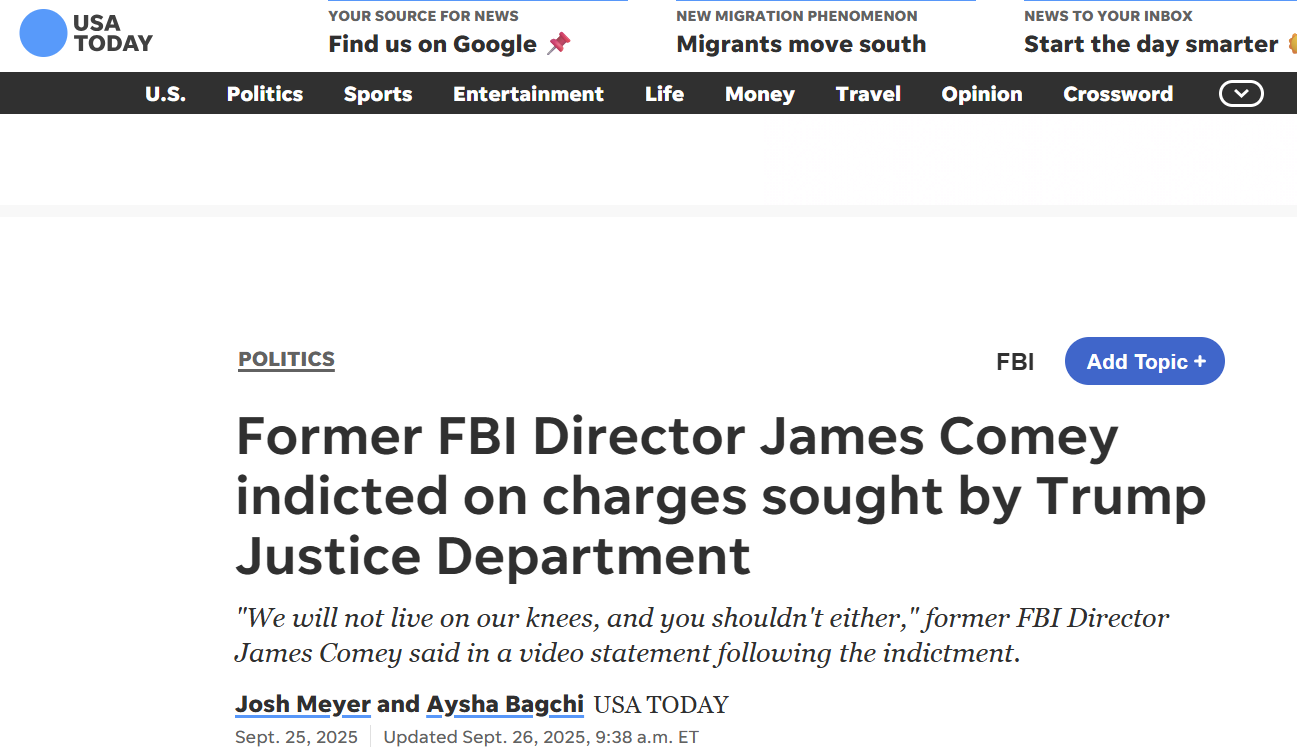
Trump, early in his first term, asked Comey for personal loyalty and to drop the FBI's inquiry into National Security Adviser Michael Flynn. Both of which Comey refused. Comey also angered Trump by investigating the Trump campaign’s connection to Russian operatives.
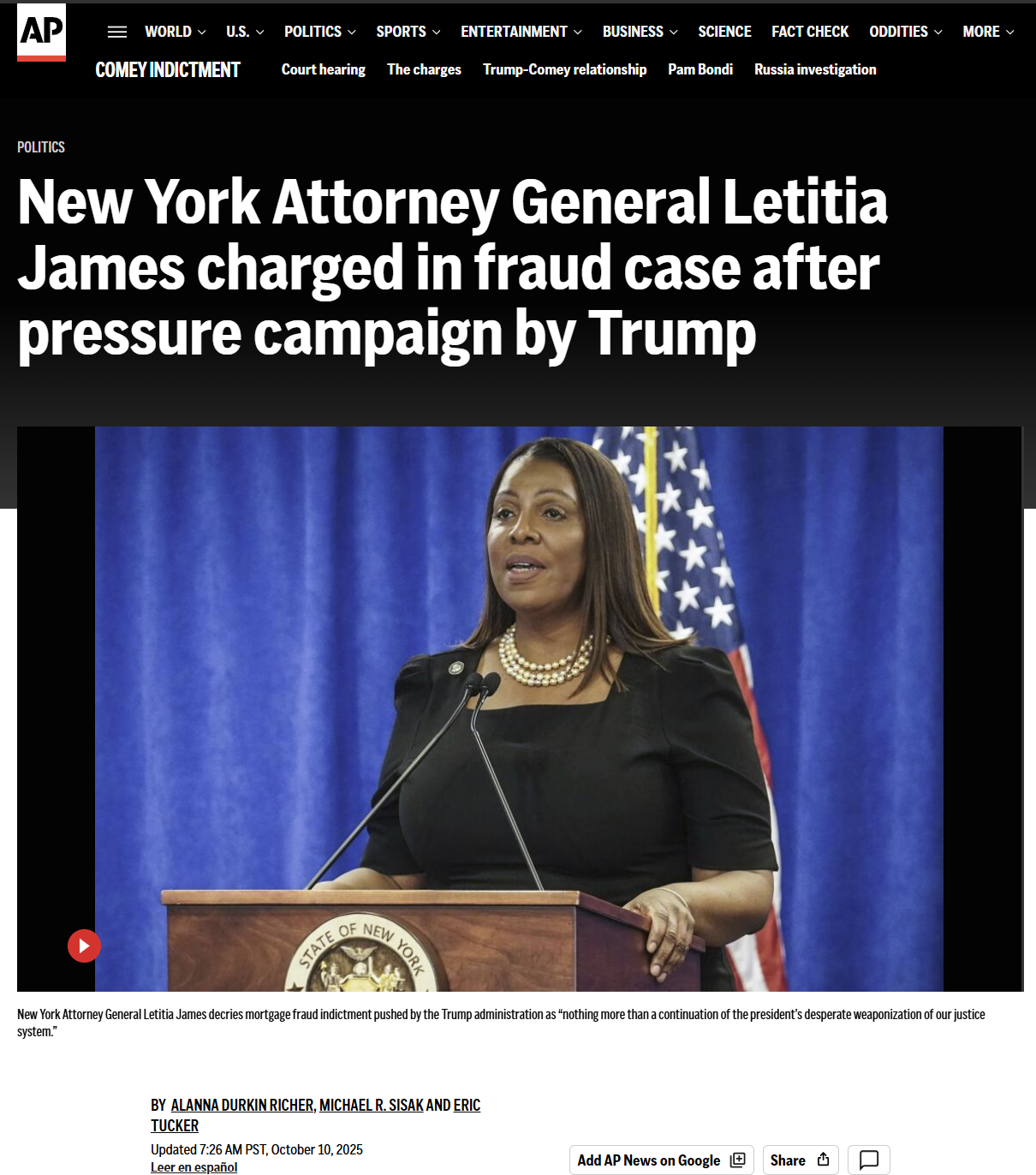
Leticia James, in her role as the Attorney General of New York, sued the Trump Organization for defrauding banks and investors
Respect for science gives way to ideological pressure
Third Reich
The Third Reich’s goal of ridding Germany of Jews due to Nazi rabid antisemitism led to devastating results for German science, which was among the best in the world. “When the Chairman of the Board of Directors of I.G. Farben, the Nobel Prize winning chemist Carl Bosch, met Hitler in the summer of 1933 to complain about the damage to Germany’s scientific interests done by the dismissal of Jewish professors, he got a rough reception. The proportion of sackings was particularly high in physics, he said, where 26 per cent of the university staff had been dismissed, including 11 Nobel Prizewinners, and chemistry, where the figure was 13 per cent……Brusquely interrupting the elderly scientist, Hitler said he knew nothing about any of this, and Germany could get on for another hundred years without any physics or chemistry at all; then he rang for his adjutant and told him that Bosch wanted to leave” (I, pg. 426).



Respect for science gives way to ideological pressure
Trump
Trump and his DHS secretary, R.F. Kennedy Jr., have been slashing research generally and especially at universities that won’t abide by Trump’s political dogma.
Buying Public Interest
Third Reich
Once in power Hitler quickly exerted control over the press through the regulatory body The Reich Press Chamber. They controlled the Reich Association of German Railway Station Booksellers by insisting on inclusion of Nazi propaganda. “With such restrictions in place it is not surprising that the public became more distrustful of what they read in the newspapers…In the course of 1934 alone the circulation of the Party press decreased by over a million all told, and it would have fallen still further in this and subsequent years but for the bulk orders by Nazi Party organizations (II, pg. 148).

Buying Public Interest
Trump
We see a similar action to bolster the apparent public interest of MAGA supporter Donald Turmp Jr.’s ideas through bulk purchases of Jr.’s book by the RNC.
Leaders don’t know what they don’t know
Third Reich
On 22 June 1941 Hitler’s forces started Operation Barbarossa, the advance to the East through Ukraine and ultimately to Moscow. Initially the German forces had great success moving 50km or more per day. The Soviet forces were ill-prepared and by the second week of July the Germans had captured 600,000 prisoners. The Germans were met with unexpected resistance as they continued their march eastward, “German military intelligence had failed to realize the presence of the huge Soviet reserve units to the east of the Dniper, from which fresh troops were constantly being moved to the front. Little more than a month after the invasion had begun, leading German generals were beginning to recognize that the Soviet Union was the Third Reich’s ‘first serious opponent’ with ‘inexhaustible human resources’ ” (III, pg. 199).
Within a month after the invasion German progress slowed. At this point Hitler starts to insert himself in the military strategy despite a lack of training. This would ultimately spell disaster for Operation Barbarossa. “The leading German generals, following the classic Prussian military doctrine of going for the enemy’s centre of gravity, wanted to continue on to Moscow. But Hitler, whose contempt for the Russian troops was boundless, did not think this would be necessary; for him, securing economic resources in the western parts of the Soviet Union was the primary aim; the Soviet state would crash into ruin in any case.” (III, pg. 201).
By December 1941 there had been repeated attempts by German generals to make strategic retreats which Hitler vetoed. Finally, the Commander-in-Chief of the Army, Walther von Brauchitsch, could no longer take the stress and resigned. “After some discussion, Hitler decided that he would replace him not with another general, but with himself.” (III, pg. 210). The campaign was ultimately a failure, despite Hitler’s attempt to guide his troops to victory, and cost the German forces 357,000 troops killed or missing.

Leaders don’t know what they don’t know
Trump
Trump has claimed no one understands tariffs as well as he does. Nevertheless he repeatedly makes false claims about tariffs which even poorly trained economists would realize are wrong.
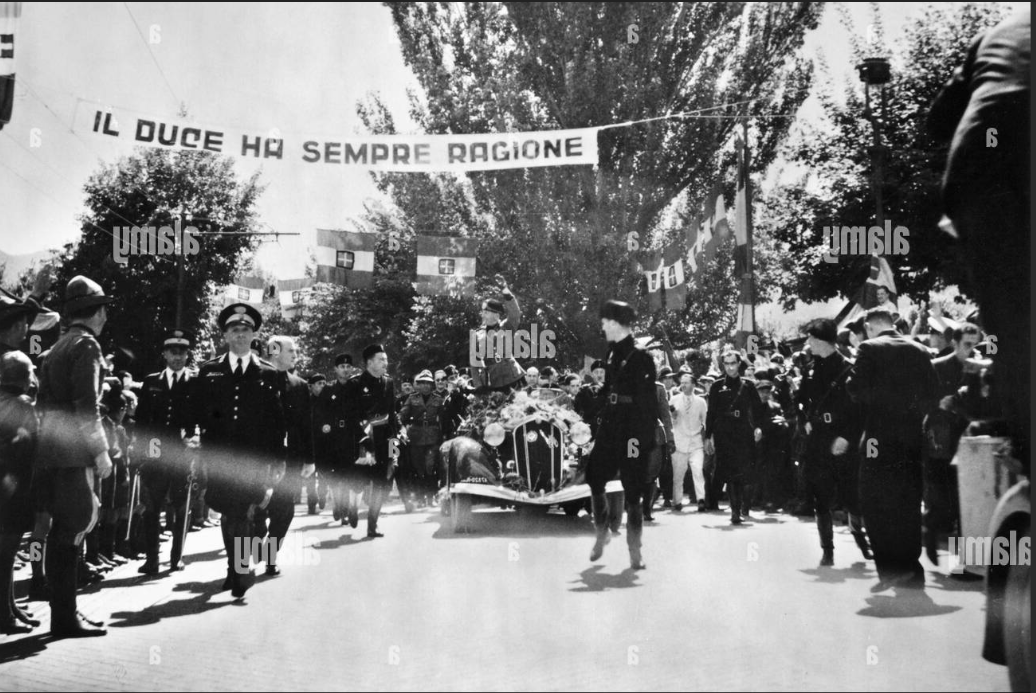
The Leader is always right
Mussolini
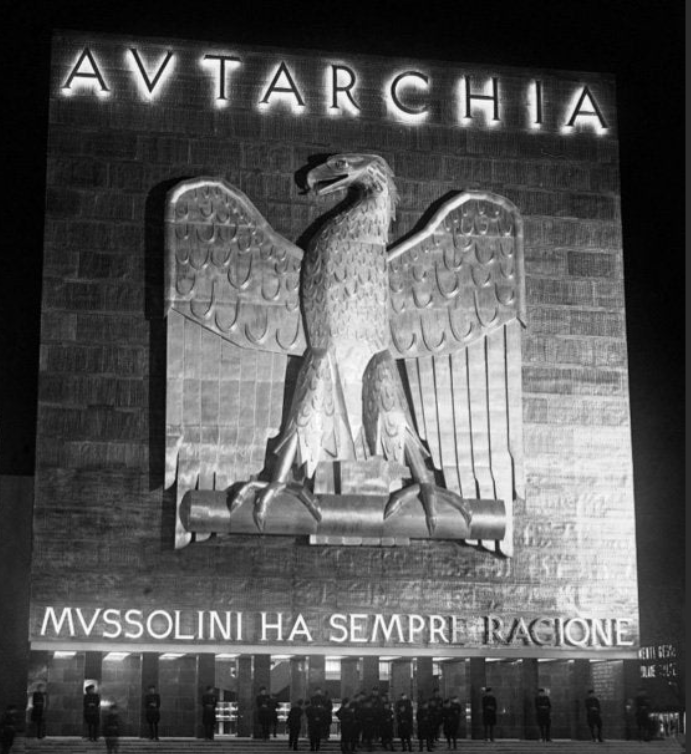
Here I depart from the Third Reich to draw some similarities to Mussolini, Hitler's contemporary. To assert his dominance banners and buildings were plastered with the words that Mussolini is always right. The top figure says in latin "Mussolini has always been right". The next figure says in Italian "Mussolini is always right"
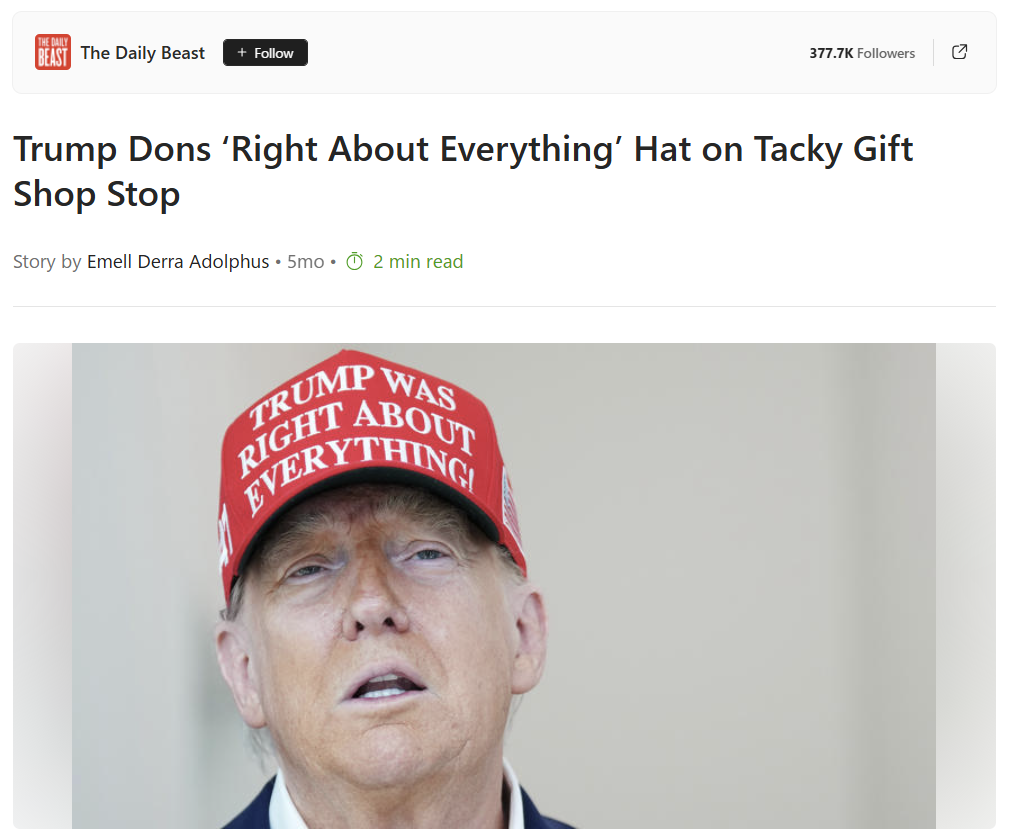
The leader is always right
Trump
Trump, oblivious to history, assumes the same mantra as Mussolini